








Essays · T5 · Institutions
TheHundred-YearInstitution.
Almost nothing we build is designed to outlive us. A few things are, and they share a surprising structure.
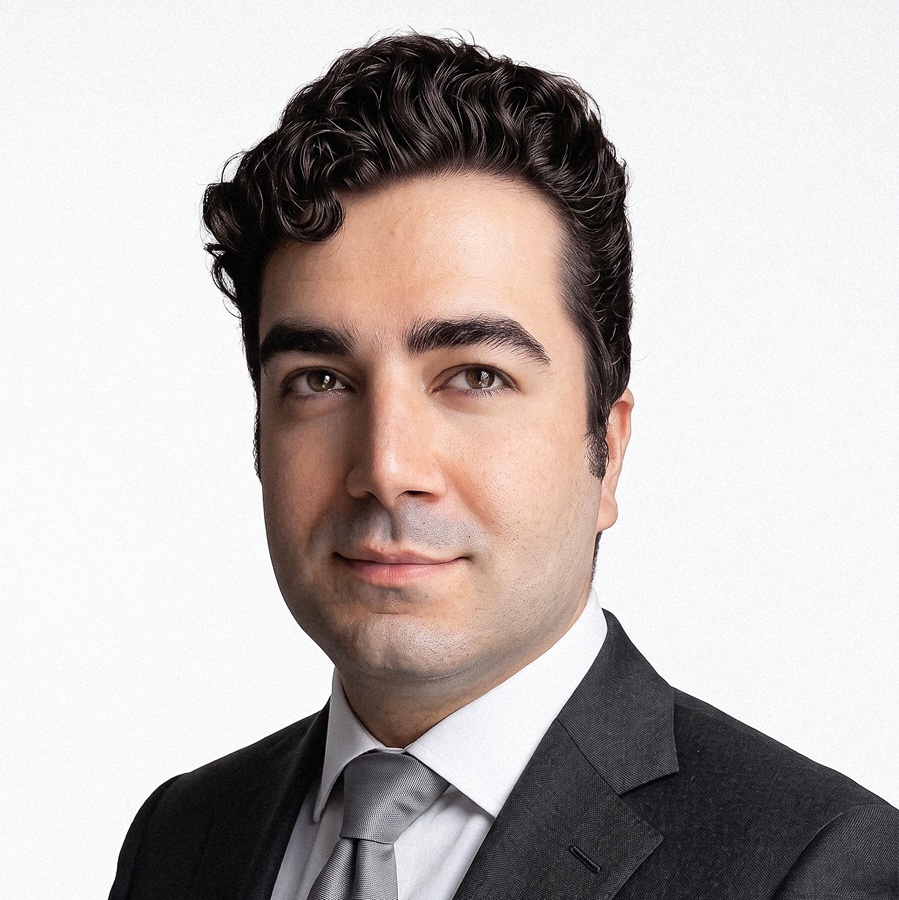
Kamiloo Artmand · 13 min readThe shortness of things
Consider what you have built, or what you work for. Ask how much of it will still exist in a hundred years. For most people, the honest answer is none of it. Companies are short-lived. Most start-ups disappear within a few years, and even large firms tend to last decades, not centuries. Political parties, newspapers, foundations and movements rise and fade with their founders. We live inside a great turnover of institutions, and we barely notice it.
And yet some things last. A few universities have run continuously for more than eight hundred years. Certain family firms in Japan have operated for many centuries. Religious orders, parliaments, guilds and hospitals have lived through wars, plagues and revolutions. Some of the oldest structures in human society are not buildings at all. They are arrangements.
This has fascinated me for a long time, and for a personal reason. I come from a people whose institutions have been destroyed over and over again. Archives have been burned, schools closed, organisations dissolved by whoever held power that decade. If you grow up in such a place, you develop a particular obsession. You begin to ask what it is that survives. Why is it that a poem can outlast an empire? Why do some small things last for a thousand years, while mighty things collapse within a generation?
Some of the oldest structures in human society are not buildings. They are arrangements.
I am writing a book called 100. Its subject is how to stand among the hundred greatest of history. It treats that question through the lens of branding, and I understand why that may sound strange. But the deep question of branding is the same as the deep question of history: what makes a name survive its owner? The people and institutions that endure have something in common, and I believe it can be studied.
This essay is about institutions, and it has a practical purpose. I think that most founders never set the time horizon of what they are building. They assume that it will last, or they do not think about it at all. But a thing designed to survive for a century has a different structure from a thing designed to survive for a funding round, in the same way that a cathedral differs from a marquee. Duration is a design parameter. It should be decided on purpose, and early.
A warning before I start. Longevity is not a virtue by itself. Many institutions deserve to die. The aim here is not to preserve whatever exists. The aim is to understand how something worth keeping can be built, so that it does not vanish when the person who loved it is gone.
Layers of permanence
The writer Stewart Brand gave us two useful ideas here. In How Buildings Learn, he observed that a building is really several layers that change at different speeds: the site, the structure, the skin, the services, the space plan and the stuff inside. Later he extended this into a theory of pace layers for civilisation as a whole, in which fashion moves fastest and nature slowest. The fast layers innovate, and the slow layers stabilise.
I think every institution has such a structure.
- Products
- Replaced in years.
- Strategy
- Revised every decade or so.
- People
- Replaced within a generation.
- Rituals
- Handed on, and quietly adapted.
- Purpose
- Changes least, and should be guarded.
The higher a layer sits, the faster it changes. An institution should know which is which.
Products turn over within years. Strategies get revised perhaps once a decade. People arrive and leave. Beneath those sit the rituals: the ways of doing things, the annual meeting, the form of a graduation, the way a new person gets inducted. At the bottom lies the purpose, which ought to change least of all.
Institutions die in two opposite ways, and both are errors about these layers. Some treat a fast layer as if it were slow. They become so attached to a product or a method that they refuse to let it go, and they die with it. History is full of firms that were excellent at something the world stopped wanting. Others treat a slow layer as if it were fast. They revise their purpose to suit each new fashion, each new leader and each new funder, until nobody can say what they are for. They may survive, but as something hollow.
Treat a fast layer as slow, and you die with your product. Treat a slow layer as fast, and you survive as nothing.
The discipline is to know exactly which layer you are on. Change the product without guilt. Guard the purpose with your life. A great university has replaced everything about its teaching several times over, and it has kept its reason for existing. It is the same river, with entirely different water.
- The museum
- Faithful, and slowly becoming its own exhibit.
- The long institution
- New forms in service of an old purpose.
- The husk
- A famous name around an empty building.
- The drifter
- Survives by becoming something else entirely.
Survival alone is not the aim. The top-right corner both lasts and still means something.
The matrix names four fates. The museum keeps its purpose and freezes its form. It is faithful, and it slowly becomes an exhibit of itself. The drifter keeps moving and forgets why. The husk is the saddest of all, a great name around an empty building, of which you can find plenty. The long institution is the rare one in the top right. It changes its form again and again, in order to keep its purpose alive. I find it useful to think of tradition in those terms. A living tradition is not the preservation of ashes. It is an argument that has been going on for a very long time, among people who care about the same thing.
The founder problem
Almost every institution begins as one person's obsession. That is its strength, and it is also the first thing that can kill it.
- Weight of the structure
- Rules, standards and memory.
- Weight of the founder
- What depends on one person.
Model · illustrative, not measured data
A healthy institution moves weight from the person to the structure, on purpose and early.
A young institution is its founder. All decisions pass through them, all relationships are theirs, and all the standards live in their head. That is natural. It is even necessary. Something new needs an unreasonable person to bring it into being. But the curve has to cross. Over time, weight must move from the person to the structure. Most founders either fail to do this or refuse to.
Max Weber described the problem a century ago as the routinisation of charisma. An authority that rests on one exceptional person is unstable. For a movement to survive its founder, that charisma has to be converted into something ordinary: offices, rules, procedures. Weber saw that this is both necessary and a little sad, since something is always lost.
The transfer is painful, for a reason that few people say out loud. A founder's sense of self is usually built on being needed. Each rule that makes them unnecessary feels like a small death. I build many things at once, and I have to ask myself the same question constantly: what would happen to this if I were gone? I am not writing as someone who has solved it. I am writing as someone who is trying.
Each rule that makes a founder unnecessary feels like a small death. It is the only kind that gives life.
The first succession is the most dangerous moment in the life of any institution. It is the point at which the organisation discovers whether it is an institution at all or merely a person with staff. Many fail right there. Some founders choose a weak successor, so as to remain important. Some never choose. Some leave in such a way that the next person is destroyed. The better ones begin preparing decades before they need to. A serious founder should be working on the first succession before anyone else thinks it is relevant.
Here is a test worth using on any project. Imagine the founder leaving tomorrow, without notice. What stops first? Whatever stops is your next piece of work. It is usually one of three things. There is a relationship that only the founder holds. There is a standard that exists only in the founder's eye. Or there is a decision that nobody else is allowed to make. Each of these can be converted, one at a time, into something that belongs to the structure.
A warning in the other direction. An institution should not erase its founder. A founding story is a powerful thing, and people need it. The goal is for the founder to pass from management to myth: from being the person who decides, to being the story that explains why anybody decides anything.
What compounds
If you want something to last, you need to be honest about where the effort goes. Nearly everything that excites us decays, and the things that endure tend to be boring.
| Decays | Compounds | Why it matters |
|---|---|---|
| Campaigns | Reputation | A reputation earns on past deposits |
| Charisma | Procedure | A procedure works on a bad Tuesday |
| Fashion | Standards | A standard outlasts its taste |
| Personal networks | Institutional relationships | They survive the people who made them |
| Grants | Endowments | They remove the need to please |
| Hardware and software | Formats and archives | Readable records beat clever systems |
| Slogans | Rituals | A ritual is repeated by people who do not know why |
Most budgets are spent in the left column. Most of what survives comes from the right.
Campaigns decay, and reputation compounds. Charisma decays with the person, and procedure compounds. I know how unromantic that sounds. Yet a procedure is what still functions on a bad Tuesday, with a tired staff and no leader in the building. A great institution is, among other things, a very large collection of good habits that no longer need to be thought about.
Personal networks die with their owners. Institutional relationships do not. Fashion decays, and a standard compounds, since each year that a standard is kept makes it more valuable. Think of what it means to say that something has met a certain standard for a hundred years.
Money deserves a closer look. Grants decay. Each one has to be asked for again, and every act of asking bends the institution slightly towards the giver. An endowment compounds, and its real value is not financial. Its value is independence: the ability to tell a powerful person no. Many of the oldest institutions survived their worst centuries because they owned something. They had land, or a fund, or a building. If you want a hundred-year institution, start thinking about its endowment on the first day, even if the sum is tiny, because the discipline matters as much as the amount.
Technology is a special case. Systems decay very quickly. Software from twenty years ago is often unreadable. Formats and archives can compound, if they are simple and open. A clay tablet can be read after thousands of years. A file on a floppy disk from the 1990s may well be lost. That is the reason why I care about formats and records as much as I do. The most durable technology tends to be the plainest one.
A clay tablet can be read after thousands of years. A floppy disk from the 1990s may well be lost.
Finally, slogans decay and rituals compound. This is the row that surprises people. A ritual is a piece of meaning that has been made repeatable, and it survives precisely because the people performing it do not need to understand it fully. An annual ceremony, a form of words, a way of welcoming a newcomer: these things carry an institution's memory in their bodies. It is the reason a prize needs a ceremony and a charter needs a reading. If you want an idea to survive for a century, do not only write it down. Give people something to do, together, every year.
Identity plays a part here that I think is widely underestimated. A good visual system is a slow layer. A seal, a typeface, a colour, a name: these survive leadership changes and they tell every new generation that it has joined something older than itself. Some of the most enduring symbols in the world have changed only slightly in centuries. People think that brand work is about the launch. Done properly, it is one of the few things that an institution can do today that will still be doing its job in a hundred years.
The shape of a century
Let me try to draw the whole thing. A chart like this is a model, of course, and no institution will run to a schedule. But I find it useful to see how little of the story belongs to the founder.
- The founder
- One person, one conviction.
- The charter
- Purpose and rules, written while it is still easy.
- First succession
- The dangerous hand-over.
- Standards
- Quality that no longer depends on who is in charge.
- The endowment
- Money that does not need to be asked for.
- The archive
- A memory longer than any employee.
- Reinvention
- The form changes so the purpose can stay.
Model · illustrative, not measured data
The founder occupies the first bar. Most of the chart happens after they have left.
The charter comes early and it is short, because the time to write the rules is while everybody is still friends. Those rules are much harder to write once there is money or power to fight over. Founders tend to postpone this as bureaucracy. I would argue the opposite. It may be the most creative act of the whole enterprise. A good charter answers some hard questions in advance. What is this for? What will it never do? Who can change these rules, and how hard should that be? How does a leader get removed?
The archive begins on the first day, and it runs across the whole chart. An institution with no memory repeats itself and forgets its reasons. It also has nothing to teach a new generation. Keep the minutes. Keep the reasons for decisions. Your successors, a long way off, will be desperately grateful. I come from a place where the absence of archives has done terrible damage, so I may be more emphatic about this than most people.
Standards take decades to mature. Quality slowly stops depending on whoever is in charge. The endowment starts to grow. Then, somewhere in the second half of the chart, comes reinvention, and I think that is what separates the long institution from the museum. Every great survivor has had at least one moment of profound change, when it let go of nearly everything except its purpose. Those moments are almost always resisted by the people who love the place most.
Now, what does this look like in the conditions I work in? Building for a hundred years in Kurdistan may sound absurd. The horizon here has usually been the next crisis. People have learned, for very good reasons, not to plan far ahead. Yet I would argue that the less stable a place is, the more it needs slow institutions, because they are what carry a society across its bad decades. When the state fails or the economy collapses, it is the school, the guild, the publishing house, the archive and the prize that keep the thread.
The less stable a place is, the more it needs slow institutions.
This is what I am actually trying to do across the houses I work on. It can look like a large number of separate projects. In my mind, they are attempts at slow layers: a holding, a publishing format, a platform for artists, a prize, a record. Most of them are young, and several will fail. I am under no illusion that I can see a hundred years ahead. I can only try to set the parameter correctly, and to build as if someone will one day need this to still be here.
What remains of a name
I began by mentioning my book, and I want to return to the question that drives it.
Who is remembered, and why? When I look at the people who have stood for centuries in human memory, one thing strikes me. Very few of them are remembered for what they personally did alone. Their names survive because something was built around them: a school of thought, a body of work, a set of followers, a method, an institution, a text. A name lasts when it has been attached to something that keeps on working after the person has gone.
So the two questions, how a name survives and how an institution survives, turn out to be a single question. Each needs the other. An institution needs a story, and a founding name is the best one available. A name needs a structure, or it will fade within a generation of those who knew the person. This is, I think, one of the deeper reasons that people found things. It is a way of arguing with death.
There is a danger in this, and I want to name it. The desire to be remembered can poison a good project. Founders who build monuments to themselves make bad institutions, since every decision gets bent towards their own glory. The paradox of the hundred-year institution is that it is best built by people who are willing to be forgotten. The medieval masons who spent their lives on cathedrals they would never see finished mostly did not sign their work. Their names are largely lost. Their buildings still stand.
That image stays with me. To begin something whose completion you will not witness is an odd act. It takes a kind of faith, though it does not have to be a religious one. It is a faith in people you will never meet, and a bet that they will care about what you cared about. In a period obsessed with the next quarter, it may be the most radical position available.
So here is the practical advice, in its shortest form. Decide how long the thing should last. Write down its purpose and what it will never do. Keep the record from the first day. Build the money that lets you refuse. Turn your own judgement into standards. Give people a ritual. Prepare your successor before you need to. Change the form whenever it is necessary. Guard the purpose. And then, at the right moment, get out of the way.
We will not see how it ends. Nobody who builds this way ever does. Someone will walk into that building, or open that file, or read that charter, a long time from now, with no idea who we were. If it still works, and if it still means something, that will be enough.
Principles
- Duration is a design parameter. Set it on purpose, and early.
- Change the product without guilt. Guard the purpose with your life.
- Ask what stops if the founder leaves tomorrow. Build that next.
- Rituals outlast slogans. Procedures outlast charisma.
- The hundred-year institution is built by people willing to be forgotten.