








 Press
On Biafza, add
On Biafza, it is the people who decide what is good
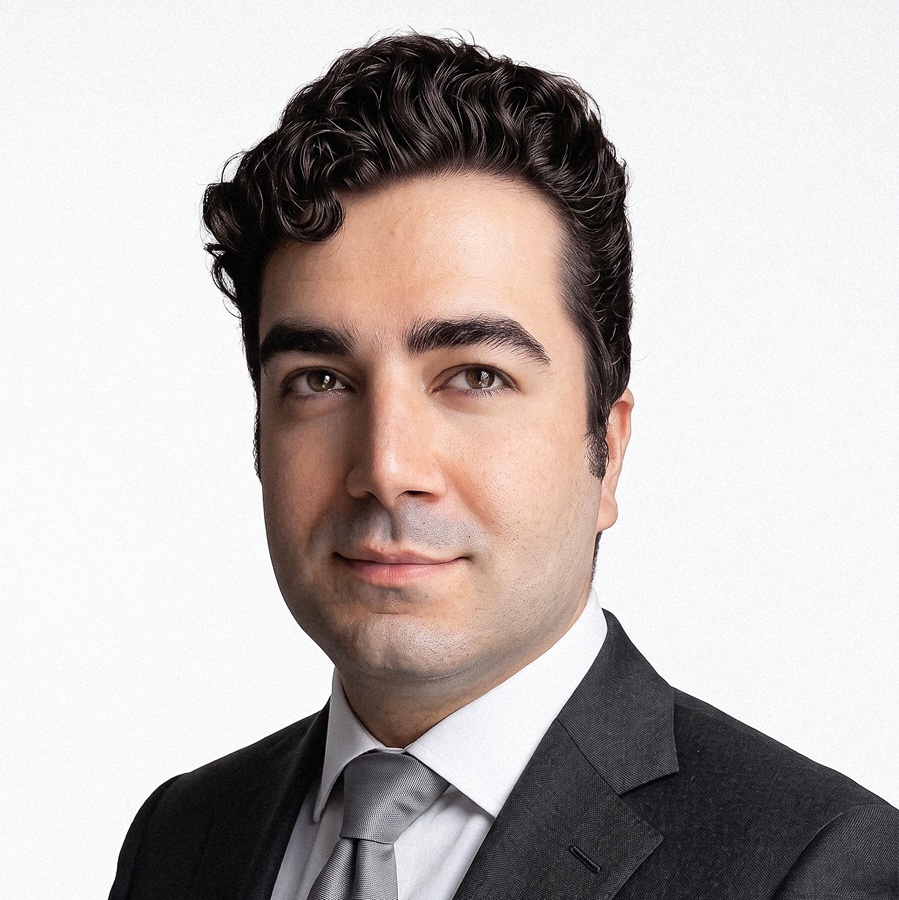 Kamiloo Artmand24 min read
Motivation, energy, excitement, hope and leadership: that is what comes to mind after a few minutes with Kamil Seyedi — a young man who has lived in Iran’s neighbouring countries and who has kept studying new business models and global economic change on his own, so thoroughly that he speaks like a graduate of the field of startups and the new economy.
This sharp young thinker, who nurtures big ideas, told us about a mysterious one — the ultimate goal he and his friends are working towards in the world of business; an idea meant to cross borders and win the world’s great markets.
The prototype of that big idea is the business called Biafza. It is at an early stage and is meant to offer many services and features to Iranian users; later, drawing on its founder’s work and life in neighbouring countries, it will continue under a new brand in those countries.
Follow the conversation below to get to know Biafza and the ideas of this young Iranian.
From coloured stones to a platform
Please introduce yourself.
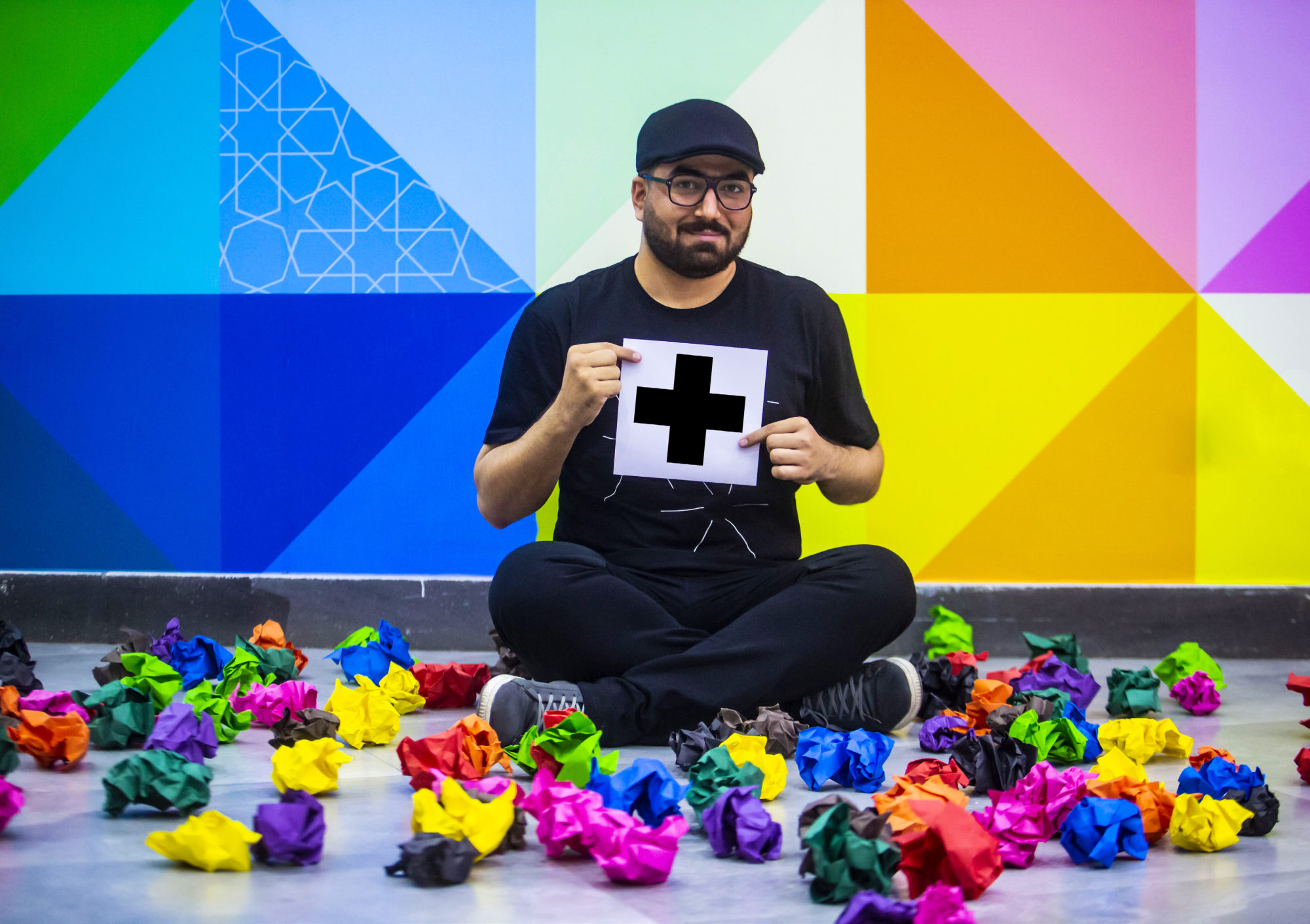
Seyed Kamil Seyedi, born in 1364 (1985). I am the CEO and founder of Biafza. I have worked in media and art for 18 years — from reporting to chief editing, as an award-winning press graphic designer, and as art director and consultant to brands, commercial and technology companies and government events, at home and abroad.
My expertise and passion are ideation, creative content development and cultural momentum. Biafza is one of the projects of the knowledge-based company “Asar-e Honarmand-e Kheradmand” (“The Work of a Wise Artist”) in Iran.
Mr Seyedi, Biafza intends to offer a set of services to its users. How did the idea for this business take shape?
It goes back to my childhood, when I fell in love with collecting and archiving — like a professional collector hunting for rare and special things. The first thing I collected was stones: small, coloured stones of different shapes that, at the age of four, were the most precious treasure in my world.
Gradually collecting and archiving became a pastime, then a habit, and after thirty years a real expertise and skill. It also affected my studies, my behaviour, my personality, and even my ability to build complete and lasting relationships with people my age, my family and my friends — I put most of my time, energy and feeling into my own archive.
In 1994, when World Cup fever was running high, I collected with great care and sensitivity the pictures on chewing-gum wrappers showing the footballers and teams of the tournament. Iran’s first full-colour newspaper, Hamshahri, which was of higher quality and had columns and pictures of wildlife, flowers and plants, cartoons and more, also became a subject of my archive; I cut out the pictures and filed them in notebooks.
Around the same time and earlier, other magazines such as Danestaniha, Gol-Agha and the Hamshahri book came along, and finally, at sixteen, when I met the computer, I realised the heart of archiving was there: music, fonts, photos, films, software and more, all of which could become subjects of my archives.
Like a bookworm, I gathered this huge volume of data into precise categories and countless hard drives, sorting it and naming it methodically according to how the audience would use it — until, after years, I understood that there are subjects more important than digital data that can be categorised, and that in business, in the market of buying, selling and services, one can also categorise and present the good and the best.
I have spent most of my focus over the last twelve years studying the world’s websites and apps. If you ask me what my expertise and skill is, I will say: reviewing, comparing, searching and, of course, listing.
We have a people’s platform, made by the people’s choice and for the people — a big electronic family; a place for people to keep a list of their personal best, share it with others, be seen on the main trends page, and let others comment, buy and do any other activity that suits the product, service or content.Kamil Seyedi
World Cup chewing-gum cards
In 1994 he collects, with great care, the footballer pictures from World Cup chewing gum, and cuts pictures from the newspaper Hamshahri to file in notebooks.
The computer: a digital archive
At sixteen he meets the computer and realises the heart of archiving is there: music, fonts, photos, films and software.
The large confidential project begins
By his own account, the main project was set in motion six years before the interview; Biafza is a piece of that complete picture.
Biafza is born
About sixty days before the interview, Biafza is created out of the philosophy of that large project.
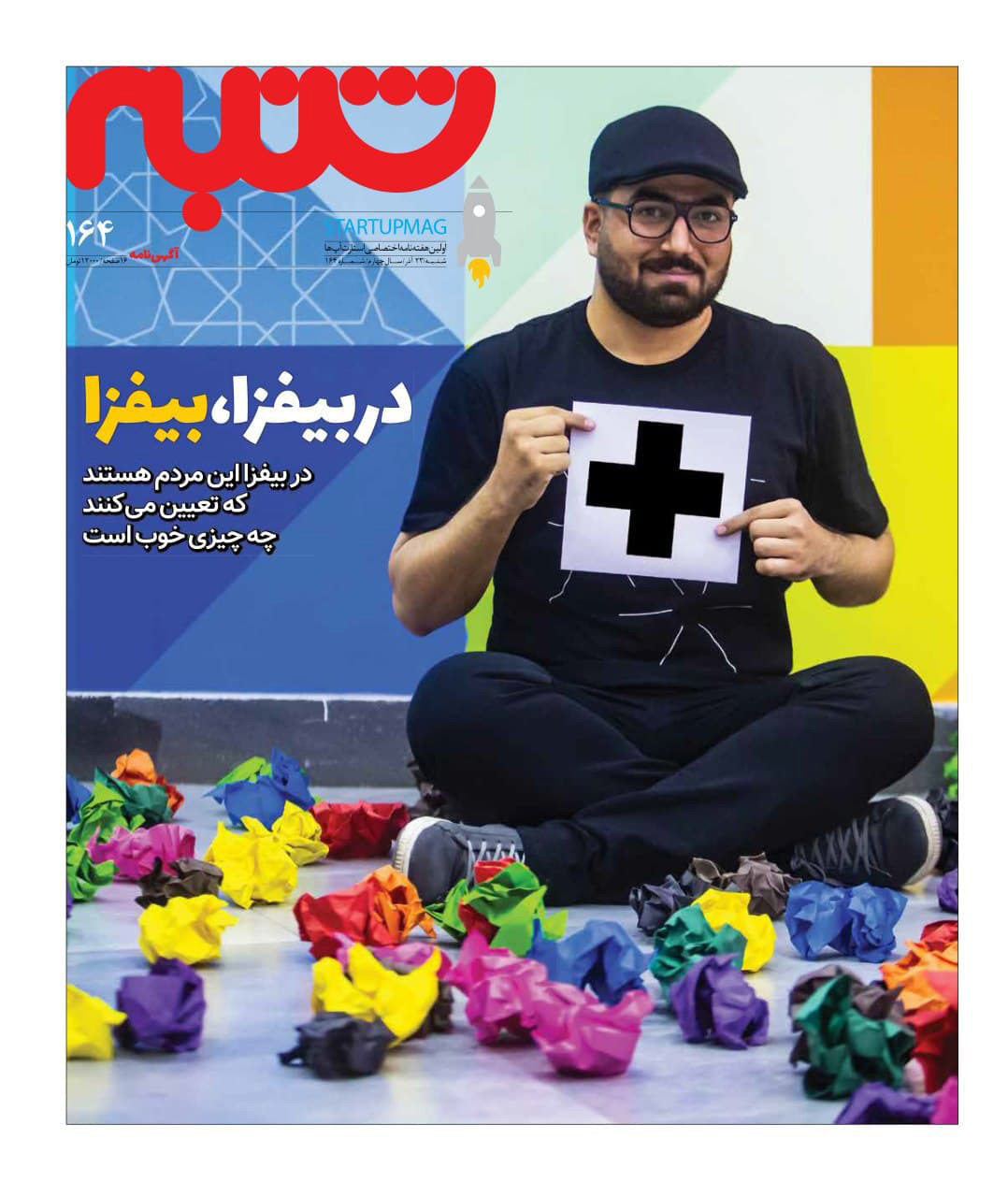
Shanbe cover, issue 164
The interview is printed in the startup issue of the weekly Shanbe.
Private prototype launch (planned)
According to the plan stated in the interview, the prototype of the app was to be launched privately for the development team.
Biafza and Nifza: a list of the best

What exactly is Biafza, and what services does it offer?
Very quickly, out of the big global project I had worked on for six years, I built a simpler, more minimal platform for the Iranian user, which can be divided into four parts. One part is a social network, like Instagram, Twitter and Facebook — a blend of the three, but in our own style, with no resemblance to those examples; a completely creative and original piece of work.
The second part of Biafza is a store, something like Digikala, Alibaba, Snapp, Divar and Komeda, where we can place and sell both second-hand goods and shop products, and also offer booking and sales of services. The way of trading, selling and listing a product is, both in appearance and in the philosophy of the work, entirely particular to Biafza and a style of its own.
The third part, which I find far more exciting, is polling. We share many different subjects — lifestyle, thought, society, culture and much more — and people take part in the polls and, in the end, give us data and a statistical population about what they like and dislike and how they react in general to domestic and foreign matters. In the field of platforms, for example, the results can help us understand which Iranian platforms are more popular, or which apps users install more.
Besides these three foundational parts, Biafza has a fourth, which in fact has the opposite properties of the first, called Nifza (“don’t add”). Things that have not had good quality or performance and may cause harm, things that profiteers have taken up, and so on, are placed in a completely separate part called Nifza, so that people stay alert and do not add to what they follow, buy and use every day. In effect, we hold a complete list of things that are good and things that are not.
To my mind Nifza is no less important than Biafza: every day we all make mistakes in our culture of consumption, buying and actions, and Nifza helps us take care. These “nifzas” are not only goods and services — many moral, psychological and personal things can be among them. Through their accounts, Biafza users will have a personal page where they can create lists and share them, or use the “biafzas” and “nifzas” already in the bank.
In Nifza, does your team decide what is not good?
No. In none of the sections do we interfere; others vote, the item gets a score and rises. For example, a user says: “don’t use this product, because the Iranian equivalent is better, cheaper, more accessible and localised”, and other users vote on it or write their opinions.
Prototype, expansion, launch and team
Is Biafza currently just an idea, or has it grown further? What stage is it at?
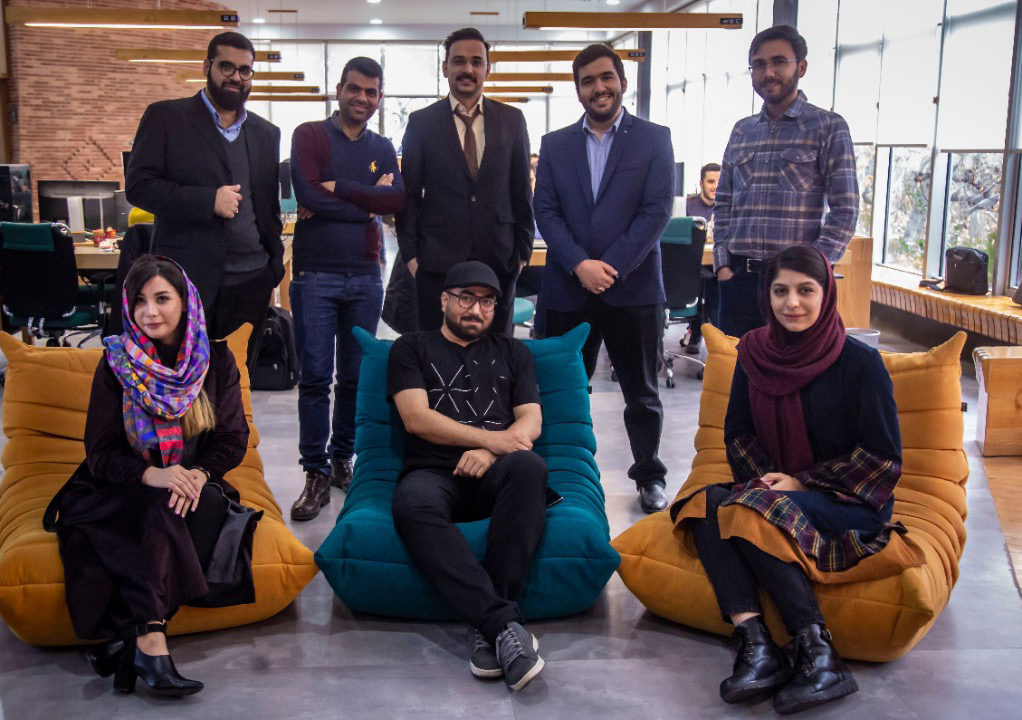
We have asked the shared workspace “Zavieh” for space, and we have designed our team completely — technical staff, designers, programmers, mentors, marketers, public relations, HR and PR. Since we have been working on the main project for six years, our team has been trained and recruited for the main project.
In fact, the purpose of the Biafza project is that main project: with Biafza’s backing we want to gain experience and wealth and create value, and then, God willing, carry out that project as the next step.
Is the Biafza project carried out only in Iran, or do you intend to expand it beyond Iran’s borders?
Biafza is entirely special to Iran; however, we have friends in neighbouring countries with whom we have talked, who have been invited, and with whom we have had several meetings, and the method, algorithm and style of Biafza is to be localised and used in their countries with another brand and another look; but the core, the science and the philosophy will be the same Biafza.
For example, we have designed Biafza for Iran, but for the Arab countries as a whole, with a population of 600 million, we are designing another app whose core and structure will be this Biafza, but with a different name. We have designed its name and logo and spoken with the investment team based there, and they are only waiting for us to bring the Biafza sample and prototype to market so they too can examine and expand it in their own local way.
In fact, this Iranian Biafza will be copied in other countries with another style and brand. Of course our professional life and ultimate goal is that main project which, God willing, once this more achievable project succeeds, will launch in the world — because when this project is seen and chosen, the next project will be accepted much more easily and with more trust and will meet with greater welcome.
When will Biafza officially launch?
One account, every service — and a useful network
Given these explanations, you are not just a marketplace; Biafza is much broader.
Yes, without doubt. To open up our mission and goal, I should say that we have plane and bus tickets, cheap hotels and accommodation, restaurants, shops and anything that can be added. That is, any business we have in Iran that can be put in the form of “product, service, content, event and so on”, you can add to Biafza.
Do you think this breadth is an advantage?
I take it as a good omen, and I feel our work can make the field more competitive and add to quality — and that is an advantage. Being a reference is always an advantage: look at Google, which in its complete platform has maps, news, shopping, search, games and more. As for how far we can support this variety and breadth in hardware and finance, we have plans in shares, investment, government support, the private sector and even foreign companies, with whom we have already entered negotiations, and we will focus a great deal of energy on this.
What advantages does Biafza have? What is in Biafza that can attract users?
Consider an Iranian citizen: from waking in the morning until the end of the night, what services does he or she need? Depending on work, study and needs, he or she starts a digital life from early morning: checks the messenger and social network for messages and what content has been shared by the people they follow, visits the site or app they want to buy from or request a service from, checks the things they want to do, and so on — in general, they face many apps and tools.
Now imagine that the different services an Iranian user needs and turns to were in one space; that is, you have one account which you top up, and you put your lists in it or search. That is one of Biafza’s advantages, besides which we have a number of other personal features — for example, books you should read, or foods you should eat in a healthy diet, can also be in your list.
We list these; if you like, you can share your list with friends or keep it private. That is, there are various lists: a personal one, one you can share with friends, and a public one.
The polling section of Biafza is another advantage. Every user has interests that, in their own view, are the best; people always have trouble buying and choosing, because they spend money, bear a cost and may lose time — so they ask: where did you buy this? How did you get it? Do you know a good doctor? And so on. You, in , say: this is the list of my best. Now if several million people do this, we have a compact list of thousands of things that other users score.
Capital, revenue and market

Have you raised capital in Biafza?
Yes, in the first stage we attracted an investor; but given the breadth of the work and the huge volume of needs in hardware, space, human resources and support, we defined an investment portfolio — how much each share is worth, how far an investor can come in, and in which part and in what amount that capital is spent. We want to be seen and known by investors so that this product comes to market with quality, and so that we do not spend a long time reaching a quality result and lose time.
So you have raised initial capital to start the work?
We raised initial capital to unveil the platform; but as soon as audiences turn to the system, platform or app, we will need more human resources, space, equipment, advertising, and servers and data centres, and as a result we must be able to attract more investment.
On the other hand, audiences will expect more from Biafza day by day, and this requires us to gradually increase the other sections and add the things we had designed earlier. It is not that we have designed a platform that must have all its features and parts ready; we want to grow, step by step, with the user, over time.
How will Biafza make money?
The first part of our income is advertising: when we prepare a platform where goods and services are seen, and a social space where others are active, the first matter is advertising, because there are brands that like to be seen more. The second is products that, according to the polls, we identify as things people like, and which we design or produce ourselves according to the investment in our second section: that is, the product is made and supplied by us and sold, and the main profit of it returns to the company.
The third source of income is sales partnership: suppose various products are sold through us; certainly part of that sales income returns to us. The fourth is the statistics and polls in Biafza.
Part of these statistics is hidden: for example, as an ordinary user you know what percentage of votes some item got, but you do not know how many of those who voted are from which province and city, their gender, age, education and so on. Only we have access to all of this data; if centres, companies and brands want access to these statistics, in line with the ethics and personal-privacy standards of users that exist worldwide and are entirely clear, we give the owners of goods and the government the data that does not harm users’ privacy, so they can complete their statistical population.
Our priority is not income; we look to create the platform, because if the platform is created, income will follow.Kamil Seyedi
People define what is good
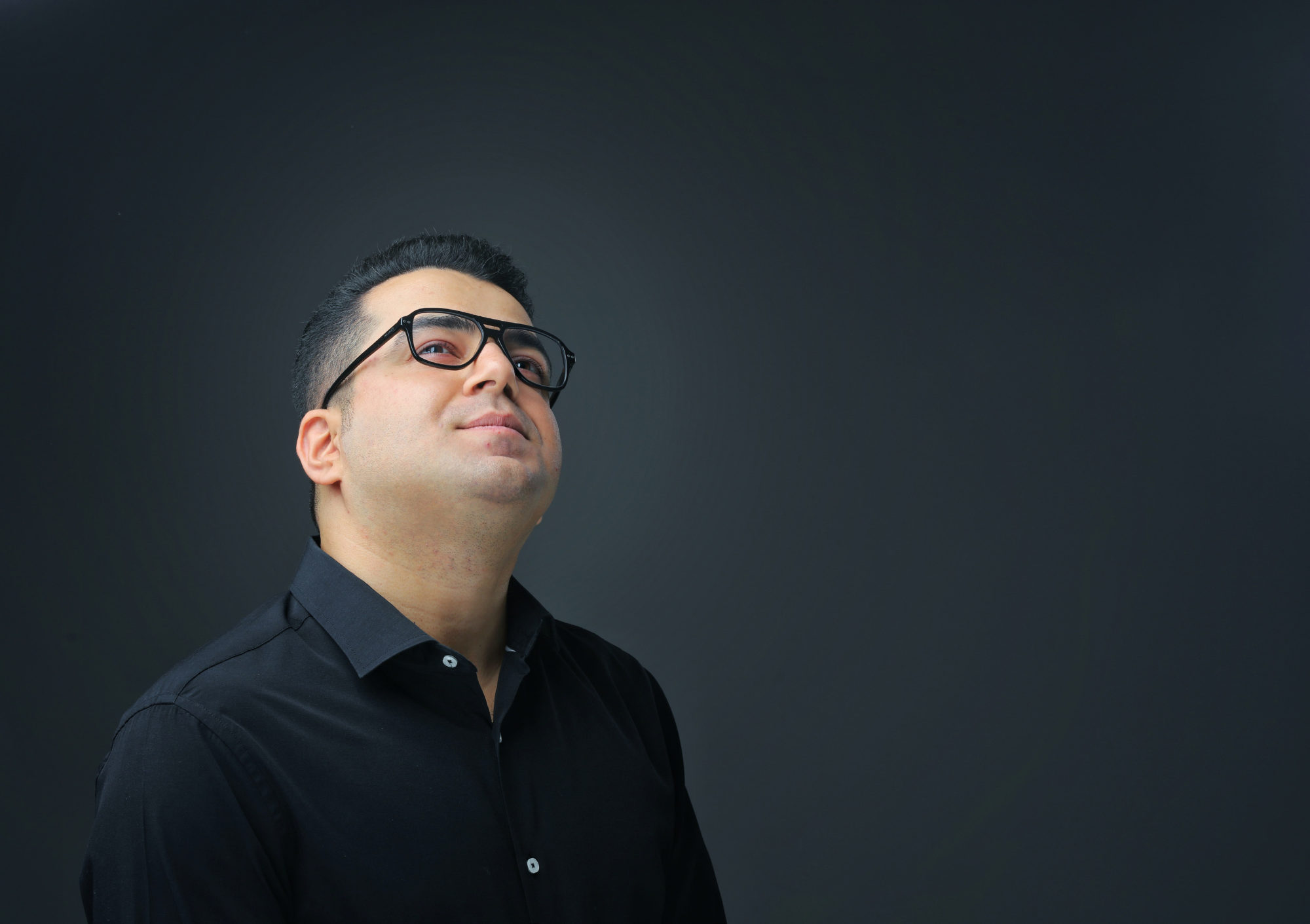
What vision do you see for Biafza — the Biafza that will soon launch?
God willing, in the first step we intend to launch Biafza across the country in the four parts I mentioned, and in the next step to expand this same Biafza, with the brand I mentioned earlier, to other neighbouring countries where we have a history of study, life and work and very deep ties with the people, such as Turkey, Iraq and Afghanistan.
We have very good social bases in these countries — both our team and I, who have lived there — and very close relationships with elites and centres of power. Our vision is that after Iran, in these countries, with their own special brands, through localisation and with local investors, we make this happen.
The third step, after that, will certainly be our main project, which we will carry out with the capital, experience, team and achievement we have. Of course, right now, in parallel with Biafza, that project is under way, and the study, technical work and reviews are being done. After all, every product has an idea behind it and, in a way, an invention is formed; after the idea there is a formulation of how to implement it, and the frame, shape and UX structure are designed, and later it is created in programming and developed, and finally user experience tells us how the tool can be flexible for change and improvement.
Our vision is that, God willing, an Iranian brand, an Iranian thought and an Iranian solution can become global too. Our whole aim, given that we are a reference and want people’s message to be seen and heard, is for people to come and say what they have to say, which may be a matter of taste, of vote, of belief or anything else. And if something is against the collective interest, the people themselves boycott, negate and reject it.
On what basis are the shoulds and should-nots of Biafza and Nifza formed?
When I raised that main idea, my technical advisers said its implementation is technically and infrastructurally impossible in Iran, and that we could carry out only 15 per cent of this project — done as a real prototype — and then attract a foreign investor.
I welcomed this very correct and expert view and thought of starting a project smaller than this macro project. Before the idea of Biafza was created from that e-book whose slogan was “add to yourself”, I talked with my friends about a brand called “Dorost” (“Right”): to make a brand called the right thing, the right way, the right work, the right place — and we created a slogan for it. For example, I said the right place is here, such as a café, a restaurant and any place that is the right place to stay; or the right work, which is the job opportunities you are looking for, and many other things that would be right.
Contrary to what might be imagined about Biafza, we are not a store and a social network, but a list of everything that exists in Iran, positive and negative and of any quality — and it is the people who define what is good and what is not.Kamil Seyedi
An intelligence that understands, befriends and respects
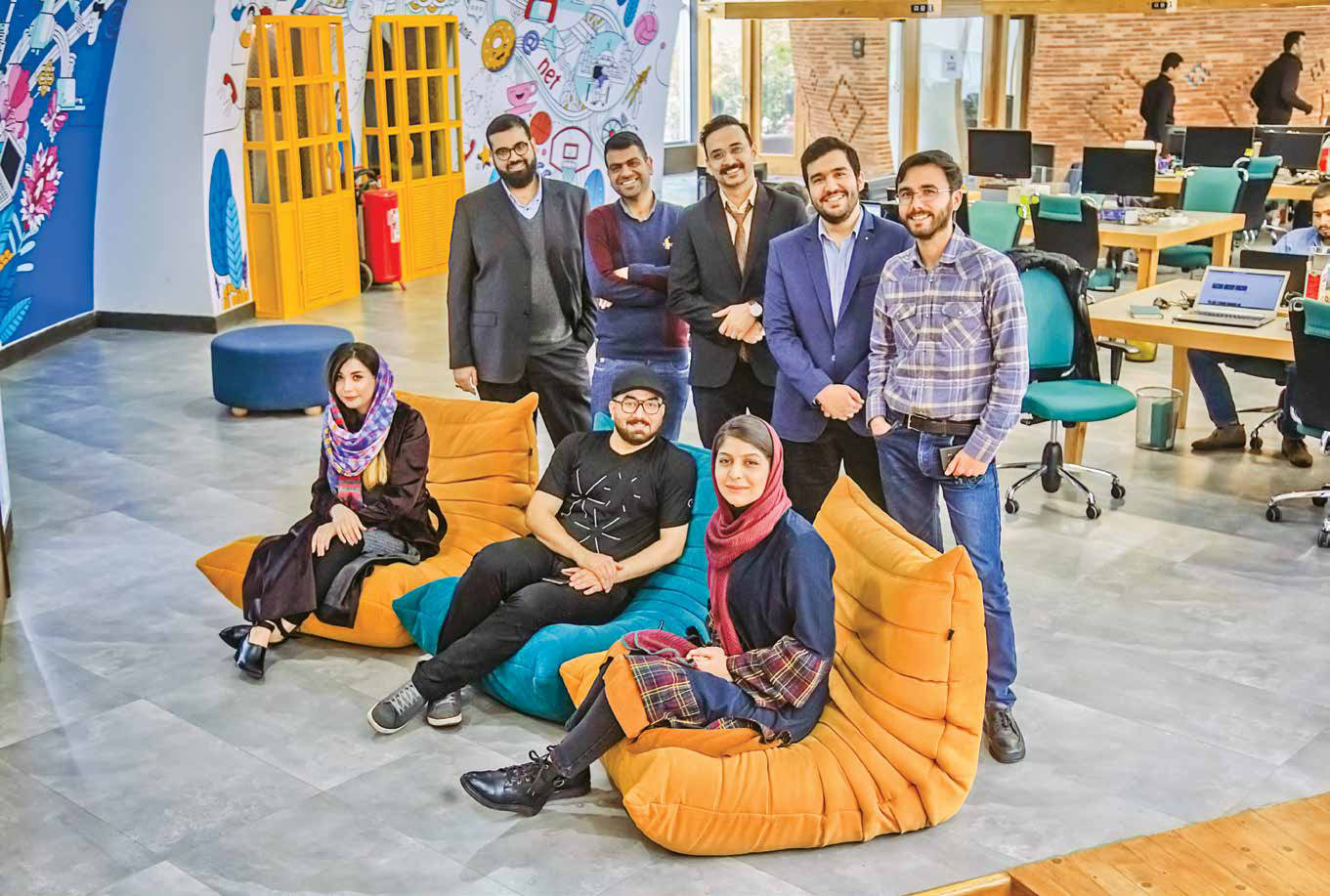
Since Biafza has within it all the services of Iran’s good startups and is only just beginning, how will it attract users who are used to other apps?
Kamil SeyediThroughout history, from technology to traditional examples, we have had many cases where a brand or organisation was first but, through mistakes and managerial changes and so on, declined and could not update itself and was damaged — Yahoo, for example, which you know was first in its field until Google came and took that position from it. Biafza’s quality is no exception to this rule and can attract the taste and attention of its audience.
What approach will you take in this space?
Kamil SeyediThe appeal, simplicity, authority as a reference and user-friendliness of Biafza can help attract users. There are many ways to do this, and we use all methods of marketing, content-making, advertising, audiovisual media, special events we have for this purpose, using popular characters who are seen among the people and inviting them to use this space, and so on.
Amin Barani, 31, is an artificial intelligence specialist and works as CTO of Biafza. What does he say about attracting and retaining users?
Amin Barani, technical deputyI want to explain the point about being a reference a little more.
We had software, created a few years ago, that sold mobile top-up: you ran the software and got mobile credit. Then software came along that also offered internet credit, and many people migrated to it.
Then another piece of software added card-to-card transfers, and many users moved to it, because instead of using several mobile banking apps they installed that one, topped up, charged internet and did card-to-card transfers. As this expanded, another came and sold tickets, and so on they kept adding. So the first point about us is that we are a reference.
The second point is our social network. Apart from social networks such as messengers, software today has become one-way. In fact the flaw of service software is that it is one-directional: the maker gives some features and the person must use them, and there is no interaction with the software.
Whereas our software may not be a messenger, but it can be interactive. When we ask users to vote on a product, they understand that their opinion and vote matter.
In Biafza we are producing an artificial intelligence that “understands” users, is a “friend” to them and “respects” them.Biafza team · Shanbe 164
In the Iranian Startups Year Book 2020
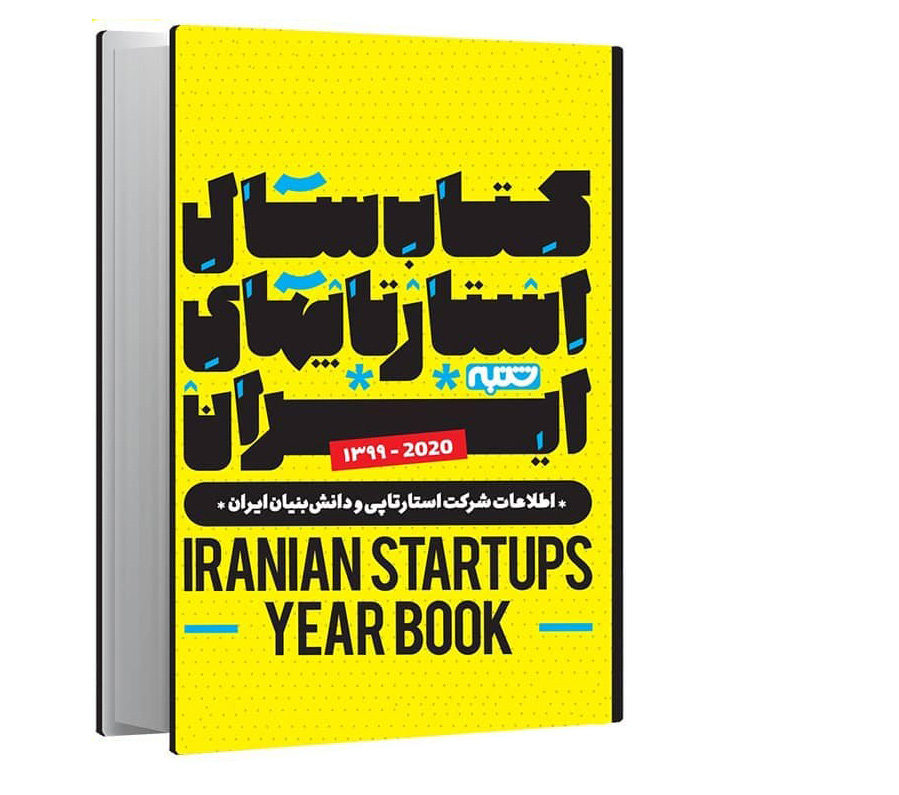
Biafza is also presented on pages 136–137 of the Iranian Startups Year Book 2020, the yearbook of Iran’s startups and knowledge-based companies.
Want to talk about this journey, from Biafza to today?
Partner
Discussion
Comments are read by Kamiloo before they appear.