








Essays · T3 · Campaign theory
A CampaignIs an ArgumentOver Time.
Most campaigns are a calendar of noise. A real one has a thesis, evidence and a rebuttal, and it wins by being right at the right moment.
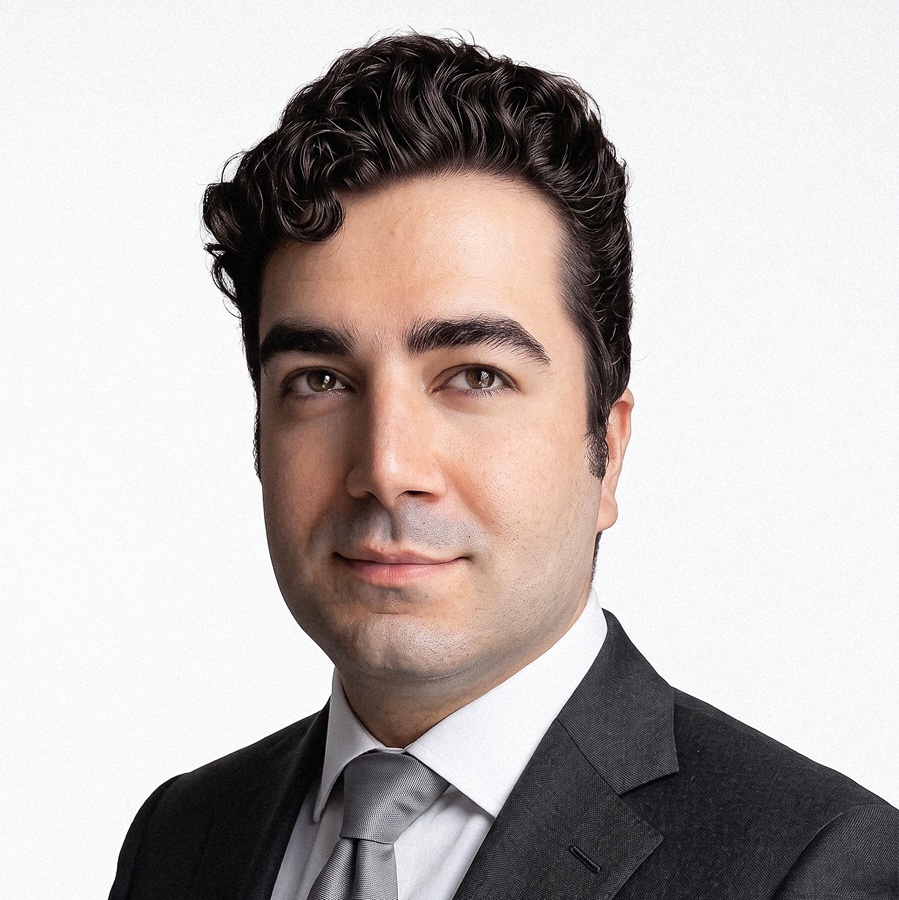
Kamiloo Artmand · 12 min readA calendar of noise
Ask most organisations to show you their campaign, and you will be handed a calendar. It has dates, channels and deliverables. On Monday, a post. On Thursday, a video. In March, an event. It is well organised and it has no idea what it is trying to say.
This confusion is very widespread. A calendar is a list of actions. A campaign is something else. I have worked on campaigns for institutions and public figures for many years, and the single idea that has been most useful to me is this: a campaign is an argument, made in public, over time.
Take that sentence seriously, and everything changes. An argument has a claim. It has evidence. It anticipates objections. It has a beginning and an end. It is aimed at a specific person who does not yet agree. Above all, it can be won or lost. A calendar can only be completed.
A calendar can only be completed. An argument can be won.
Aristotle laid out most of this about 2,300 years ago. He said that persuasion rests on three things: the character of the speaker, the emotional state of the listener, and the argument itself. Ethos, pathos and logos. Rhetoric was then taught for two millennia as a central discipline of public life. Then, at some point in the last century, we handed it over to advertising, and we began to speak of impressions and engagement instead. We kept the budgets and threw away the logic.
The difference between a speech and a campaign is the dimension of time. A speech persuades in an hour. A campaign does it across months, in a thousand fragments, spoken by many mouths, in an environment where the other side is answering back. Each fragment has to be a piece of one single argument, and that is the difficulty. It requires a discipline that creative departments rarely enjoy.
What follows is a theory of the campaign as argument, for institutions and public figures. It applies to a candidate, a ministry, a company in crisis and a cause. I have tried to keep it non-partisan, since the structure of an argument has no party. Anyone can use it. That is the reason it should be understood by everyone.
Five moves
An argument over time has five moves, and they have an order.
- Thesis
- The one claim you need the public to accept.
- Evidence
- Why they should believe it.
- Rebuttal
- The best objection, answered by you first.
- Repetition
- The same case, made in many rooms.
- Moment
- When the argument meets the event.
Every campaign worth running can be laid out in this order. Most skip the third.
The thesis is the one claim that the public needs to accept for you to win. It has to be a claim, so it must be possible to disagree with it. We care about our customers is not a thesis, because nobody will ever argue the opposite. The test is simple. If no reasonable person could hold the contrary view, you have a slogan, and not a thesis. A real thesis takes a position, and in doing so it accepts that some people will be against it.
Evidence is why anyone should believe you. Here institutions make a strange error: they reach for adjectives. World-class, unparalleled, committed. An adjective is a claim with the proof removed. The strongest evidence is specific, and it often comes from outside: a named person, a place, a number you can stand behind, a thing that happened. One real story outweighs a hundred adjectives.
The rebuttal is the move that separates professionals from amateurs. Before launching anything, write down the best possible case against yourself. I mean the strongest version, the one a fair and intelligent opponent would make. Then answer it, and answer it early, in your own words. Most campaigns refuse to do this, out of a fear that mentioning a weakness will spread it. In fact the reverse is true. An objection you have raised yourself loses most of its force. An objection you have ignored becomes the other side's whole campaign.
An objection you raise yourself loses its force. One you ignore becomes the other side's campaign.
Repetition is the patient work of making the same case in many rooms. I treat this at length in my essay on the grammar of attention. The key discipline is to change the proof and to keep the thesis. Your audience is not following you closely. They are living their lives. They will meet your argument in fragments, and only repetition can assemble those fragments into something they remember.
The moment is the final move, and it is the one that cannot be planned entirely. It is the point where your argument meets an event: a vote, a decision, a crisis, a change in the public mood. Everything before it is preparation, so that when the moment comes, you have already won the argument, and the event only confirms it. Ancient Greek rhetoric had a word for this, kairos: the right time, as distinct from clock time. A good campaigner has a sense of kairos, and it may be the one part of the craft that cannot be taught.
The order matters. Evidence before thesis is a lecture. Repetition before rebuttal is a trap, since you will have spent months building on a weakness that your opponent can then pull out.
The hierarchy of a message
Now to the structure that makes this workable across a large team.
- Thesis
- One sentence. It does not change.
- Three pillars
- The reasons it is true.
- Proof points
- Facts, cases and people behind each pillar.
- Audience versions
- The same case, in each group’s terms.
- Daily output
- Posts, remarks, replies and images.
One sentence at the top. Everything said anywhere should be traceable up to it.
At the top sits the thesis, a single sentence. Under it are three pillars, the reasons it is true. Why three? It is partly tradition, and partly because that is about what a person can hold in mind. Beneath each pillar are proof points: facts, cases and people. Beneath those are the audience versions, the same case restated in terms that a farmer, a young graduate or a foreign investor would recognise. The daily output sits at the bottom.
The rule that makes this useful is one of traceability. Any single thing said by anyone in the campaign should be traceable up the pyramid to the thesis. If a post cannot be traced, it should not be published. That may sound rigid, and it is. In practice, it frees people. A junior team member with a clear hierarchy can write a good reply at midnight without asking anybody.
There is a confusion I come across constantly: the idea that a different message should be sent to each audience. This is a dangerous half-truth. You may and should change the proof and the language. You must never change the thesis. In the age of screenshots, every audience can see what you told the others. A figure who says one thing in one city and another elsewhere does not have a message. They have a future scandal.
In the age of screenshots, every audience can see what you told the others.
Leaders present a particular problem, because they get bored and they are surrounded by people who agree with them. A principal who has said the same sentence two hundred times will start to improvise, and the improvisation is where the trouble begins. Part of the campaign manager's job, and it takes courage, is to tell a powerful person that the line is still working and that it has to stay as it is.
A thesis needs one more thing to survive: a person. Campaigns for institutions fail when they are spoken by nobody. As I argue in The Leader Is an Interface, the public reads an institution through a human surface. In Aristotle's terms, ethos comes first. Your argument will be heard only as far as the speaker is believed. It follows that the first work of any campaign is not on the message. It is on the question of who has the standing to deliver it.
The shape of a year
What does this look like when it is laid out over twelve months?
- Measurement
- Baseline research, then steady tracking.
- Narrative
- Thesis, pillars and rebuttals, written and tested.
- Digital
- The owned record, then the sustained rhythm.
- Field
- People on the ground, who carry the case.
- Media
- Relationships first, and the peak later.
- Events
- A small number of set pieces, near the end.
Model · illustrative, not measured data
Six workstreams. Measurement starts first and ends last, and that is deliberate.
Read the chart from the top. Measurement begins on the first day and ends on the last. Most organisations start measuring late, or never. You need a baseline before anything else: what do people believe now, and why? Without it you cannot know whether you have moved anyone, and you are flying on the opinions of the people in the room, who are the last people who should be trusted on the matter.
Narrative comes first and it is short. All of the hard thinking happens here: the thesis, the pillars, the rebuttals, all of it written down and tested on real people. The team usually wants to rush this, because it does not look like activity. Resist. I would rather lose a month here than lose a campaign later.
Digital starts next, and its first job is unglamorous: to build the owned record. Before you shout, make sure that anyone who looks you up finds a clear, truthful, permanent account of who you are and what you claim. In the age of AI-generated answers, that record is what machines will read, and it may be the most important asset in the whole effort.
The field comes earlier than most people expect. Real human beings, in real places, talking to their own neighbours, carry more weight than any advertisement, and they take months to organise. Media relationships need to be built before they are needed. Journalists will not take your call in a crisis if the first time you spoke to them was during that crisis.
Events come late, and there are few of them. A set piece is expensive and it is useful only as a punctuation mark. Most teams place their biggest event at the launch. I would almost always place it near the end.
- Built argument
- Steady, and strongest when it counts.
- Early spike
- A big launch that spends itself.
Model · illustrative, not measured data
An early spike leaves nothing for the decision. The goal is to arrive at the moment with force still rising.
This is the logic of the curve. The big launch is an ancient temptation, because everyone is excited and the budget is full. But a spike at the start spends your energy before anybody is making a decision. Then comes the long silence of the middle months, in which momentum falls. The argument that wins is the one still rising as it reaches the moment. So I protect the final quarter of the budget from everybody, and most of all from myself.
A launch feels like a campaign. It is only the first sentence of one.
Writing down what could go wrong
Every campaign meets a day on which things go wrong. The difference between survival and collapse is usually decided months earlier, when someone sat down in a calm room and wrote the risk register.
| Risk | Early sign | First response | Owner |
|---|---|---|---|
| Message drift | Spokespeople improvise | Return to the thesis sheet | Narrative lead |
| A false claim of ours | A fact is challenged | Correct it in public, fast | Principal |
| Hostile framing | Their word enters the press | Refuse the frame, restate ours | Media lead |
| Synthetic attack | A forged clip or quote | Verified record, then a single reply | Digital lead |
| Fatigue | The team tires of the line | Vary the proof, not the thesis | Campaign lead |
| Budget burned early | Spend ahead of the curve | Protect the final quarter | Campaign lead |
Write this before launch, when you are calm. Each answer should have a name beside it.
Two rows deserve particular attention. The first is a false claim of your own. It will happen. Someone will overstate something. When it does, the rule is absolute: correct it publicly, quickly and completely. A campaign can survive an error. It cannot survive a cover-up, because your whole asset is that people believe what you say. Every hour of delay costs more than the error itself. I have seen more damage done by the defence of a small mistake than by any mistake.
The second row is new, and it worries me more each year. It is now cheap to produce a forged video, an invented quotation or a fake document in the voice of your principal. Thousands of synthetic accounts can repeat it. I expect this to be a routine feature of serious campaigns in much of the world. There are three defences, and all of them have to be prepared in advance. Hold a verified, dated, public record of what was actually said. Have a single named person who replies, once, with evidence. And do not repeat the forgery in your denial, because each repetition teaches it to the audience, and to the machines.
That last point applies to framing in general. Cognitive linguists, George Lakoff prominent among them, have long shown that negating a frame reinforces it. Do not think of an elephant. If your reply contains your opponent's word, you have already lost a little. The discipline is to refuse the frame and restate your own: to answer the question that should have been asked.
If your reply contains your opponent's word, you have already lost a little.
Fatigue is the quietest risk. A campaign is long, and the people running it become tired of their own thesis well before the public has absorbed it. Their impulse will be to refresh it, and it must be held in check.
Budget burned early is the row that nobody believes until it happens. Spending feels like progress, and a team under pressure will always find a good reason to use the reserve now. That is why the protection has to be written down in advance, with a person who is allowed to say no.
Every risk in the table has an owner, a named person. This matters more than the content of the table. A risk that belongs to everyone belongs to nobody, and at two in the morning nobody will answer the phone.
Some warnings about ethics belong here too, since these techniques are powerful. It is possible to run a technically perfect campaign for something false. I would encourage anyone in this field to decide in advance what they will not do. Make that decision when you are not being paid to make it. Any argument should be something you could defend in front of the people it affects.
After the moment
There is one more phase, and hardly anyone plans it. What happens the morning after?
If you win, the argument becomes a promise. Everything you said in public has turned into an obligation. Institutions often run a brilliant campaign and then immediately disband the team, leaving the winner with a set of commitments and nobody to speak for them. Within a year the same public that had been persuaded feels deceived. A campaign that ends at the moment of victory has only borrowed its trust.
If you lose, the argument does not disappear. Many of the most important ideas in history lost their first campaigns. A well-made case leaves something behind: a vocabulary, a network of people who were moved by it, a record. Losing an election or a vote can be the first act in a longer argument. Some positions take several attempts to become common sense.
This suggests a larger way of thinking. A single campaign is one chapter in a much longer conversation between an institution and its public. Reputation is the sum of all of the arguments you have made, and whether they turned out to be true. Every campaign either adds to that account or draws it down. The most valuable asset that a leader can build over a career is simple to state: when this person says something in public, people have learned that it tends to be so.
So here is the theory in a single paragraph. Stop producing content. Decide what you are claiming. Find out who disagrees and why. Prepare the evidence. State the best objection to yourself, and answer it. Say it again and again, in many voices, for longer than feels reasonable. Hold your energy back. Arrive at the moment with force still rising. Tell the truth when you get something wrong. And afterwards, do what you said.
It is an old craft, and the tools have changed beyond recognition. People, though, are still persuaded the way they were in Athens: by someone they believe, who has understood what they fear, and who has a good reason.
Principles
- A calendar can only be completed. An argument can be won.
- If nobody could disagree, you have a slogan, not a thesis.
- State the best objection to yourself, first.
- Change the proof. Never change the thesis.
- Arrive at the moment with force still rising.