







Essays · 07 · Women Agency
The TableThat WasNever Set.
For a century women have asked for a seat. Women Agency starts from a different question: who built the table?
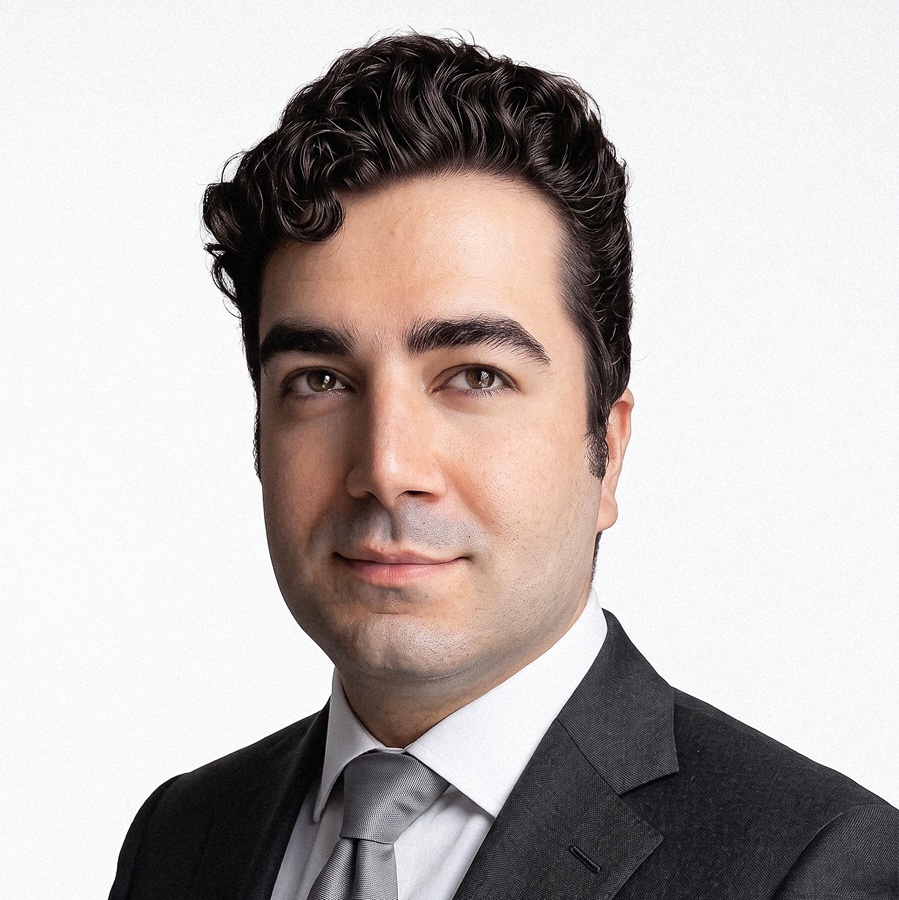
Kamiloo Artmand · 9 min readWho built the table
There is a metaphor that has dominated the debate about women and power for as long as I can remember. It is the seat at the table. Give women a seat. Add a seat. Reserve a quota of seats. Decent people have fought for this for generations, and it has mattered.
But look at the metaphor for a moment. It takes the table for granted. It assumes that the table is neutral, that its shape is correct, that its agenda was set fairly, and that the only remaining question is who may sit down. Nobody asks who built it, what it was built to decide, or whose interests are carved into its legs.
The brand bible of Women Agency opens with a sentence that stopped me when it was first put down on paper. It speaks of the table that was never set. Across history, women governed cities, unlocked scientific laws, sustained economies and preserved cultural memory. Yet the institutions that run the modern world were designed without them. When women were later admitted, it was usually to an auxiliary commission, a symbolic quota or a humanitarian appeal.
We were always asking for a seat. Nobody asked who built the table.
So Women Agency begins with a refusal. It does not petition for a place at an existing table. It proposes to build a new one from first principles. This is not a retreat, and it is not separatism. It is an architectural decision. If the structure is wrong, you do not solve the problem by improving the seating plan.
I should state plainly what this is and what it is not yet. The work began at Artmand Studio around 2019 and 2020, and it has produced digital publications, regional forums and a very large design. The dossier records a brand book, a programme structure and a partnership model. Much of what follows here is a charter and a plan, not an achievement. I am writing about it because the design itself contains an argument worth making in public.
Beyond grievance
Two kinds of language have failed women in public life. The first is the language of grievance, in which women appear chiefly as victims of something. The second is the language of tokenism, in which a single woman on a stage is used to prove that the problem has been solved.
I understand why both exist. Grievance is usually accurate. But an institution built on grievance has a strange dependency: it needs the injury to continue. And tokenism has a worse effect. It teaches a young woman that she may enter the room as an exhibit.
The bible rejects both. It frames women as sovereign creators and decision-makers across six domains of civilisation: statecraft, frontier science, autonomous capital, athletic mastery, cultural custodianship and maternal stewardship.
- Statecraft
- Leaders and negotiators shaping law and peace.
- Science
- Researchers directing frontier knowledge.
- Capital
- Founders and investors building autonomy.
- Sport
- Athletes and the institutions around them.
- Culture
- Artists and journalists keeping memory.
- Care
- Motherhood and care, treated as foundations.
The design joins six domains, so that a woman in one is connected to power in the others.
Look at what that list does. It refuses to file women under women's issues. Statecraft and science are at the top of the list, with capital close behind. These are the rooms where the future is decided. The list also does something braver, and easy to overlook. It places motherhood and care inside the same frame as statecraft, and calls them foundations of social stability. Modern institutions have spent a century treating care as a private cost. Nearly every economy depends on it completely, and almost none of them accounts for it.
Nearly every economy depends on care, and almost none of them accounts for it.
The system also matters as a system. A brilliant scientist with no access to capital remains a brilliant employee. A founder with no access to law remains exposed. A politician with no media remains invisible. The dossier states the same point in a smaller and more practical way: participation grows when visibility, skills and networks arrive together. One programme alone will not do it. The strands have to be pulled at the same time.
This is the same conclusion I reach about talent, about nations and about brands. Single interventions disappoint. Systems compound. When people have asked me why a brand studio would care about any of this, my answer has been that women in my region are the largest pool of invisible talent I have ever seen.
The charter
The part of this design that I find most serious is also the least glamorous. It is a set of five rules, and the bible calls them invariants. An invariant is a thing that does not change when everything around it does. The word comes from mathematics, and I like it far more than the word values.
- Enforceable output
- Every resolution carries a budget, an owner and a deadline.
- Human dignity
- All traditions protected, free from coercion.
- Financial openness
- A public ledger, and a cap on any single donor.
- Equal seats
- One delegate, one vote. No veto for anyone.
- Independence
- No state, party or alliance above the institution.
A charter is what you agree on before anyone is tempted. These five are designed never to be amended.
The first is political independence: no subordination to any foreign ministry, party or military alliance. The second is equality of seats: one delegate, one vote, and no veto. Think about how radical that second one is. Most of the international institutions we know were built around the idea that some members count for more.
The third is financial openness, and it contains my favourite rule in the whole document. No single government, company, foundation or individual may provide more than 20 percent of the annual operating budget. Financial dependence destroys independence, and it does so quietly. Nobody sends a threatening letter. People simply stop saying certain things. A hard cap, written before the first large cheque arrives, is the only protection that works, because the moment to write that rule is before anyone is tempted to break it.
The time to write the rule is before anyone is tempted to break it.
The fourth protects human dignity and pluralism: all ethical, spiritual and cultural traditions, free from fundamentalist coercion. In my region that sentence is not abstract.
The fifth is the one I would like to staple to every international body on earth. It is called enforceable output. No symbolic rhetoric. Every resolution must carry a ring-fenced budget, a responsible division and a delivery timeline of 24 months. A statement of concern, under this rule, is simply out of order.
The bible goes further and designs a Virtual World Parliament of Women: a target of 300 delegates, drawn from 30 cultural and geographic regions rather than from nation-states, so that stateless and minority women sit with equal weight. Those numbers are targets in a charter. Nothing about them has been achieved. But notice that one decision. A Kurdish woman has never had a state to send her to such a room. In this design she does not need one. For a people like mine, a table that is not organised by borders is not an abstraction.
A network built from safety
Now to the digital world, where the stakes for women are not theoretical.
Commercial social networks earn money from attention, and outrage is one of the cheapest sources of it. For a woman in public life this has a specific meaning: harassment at scale, surveillance, doxxing and, increasingly, synthetic images of her that she never posed for. In conservative societies a single forged picture can do more than end a career. It can put a life at risk. Those of us from such places do not need this explained.
AI makes that worse and it could also make it better, and which of those happens depends on who designs the system. So the most interesting part of the Women Agency plan is WO-NEXUS, a proposed AI-native network that starts from safety and works outward.
- Verify
- Prove you are real without exposing who you are.
- Guard
- Stop deepfakes, doxxing and stalking before they land.
- Match
- Connect members with mentors and capital.
- Decide
- Move a petition from a cohort onto the agenda.
Most networks add safety after growth. The WO-NEXUS design reverses the order.
Its first principle is that a person should be able to prove what she is without revealing who she is. The design uses zero-knowledge identity, so that a woman living under an authoritarian government can be verified as a real scholar or professional while her name stays protected. That inverts the bargain of today's platforms, which demand your identity and give you no protection in return.
The second is a guardian layer: models that catch deepfake defamation, coordinated trolling, doxxing and stalking before they reach the person. Most networks clean up afterwards, when the damage is done. The third is a matching engine that connects members with mentors, fellowships and capital. The fourth lets verified groups draft a petition and move it onto a formal agenda, so that the network leads somewhere other than a feed.
Today's platforms demand your identity and give you no protection in return.
The plan also assigns a parliamentary committee to deep science and AI ethics, with the job of auditing training data for gender bias. I think this is exactly right. Models learn from the historical record, and the historical record is the same table that was never set. If nobody audits what goes in, the old exclusion gets rebuilt at machine speed and described as objective.
None of this is built yet, and I do not want to pretend otherwise. I describe it because the order of priorities is correct, and that order can be adopted by anyone.
Her voice, in every room
The line on the Women Agency dossier is simple: her voice, in every room. It sits oddly next to a charter for a world parliament, and I think that tension is healthy. Large designs are worthless without a small first step, and a small first step is aimless without a large design.
The practical path is modest, and the dossier says so. A pilot cohort of women in the Kurdistan Region and Iraq. Mentors. Media visibility. Partnerships with institutions that can fund the work. The principles are three short phrases that I would defend in any room: visibility with safety, skills and networks, partnership.
Visibility with safety deserves a moment. It is the phrase that separates this work from the usual advice to be seen. In much of the world, being visible is a risk for a woman, and an institution that promotes visibility without protecting it is doing harm while feeling good about itself. Every profile, every photograph and every story has to be weighed against what it may cost the person in it.
So here is what I believe, stripped of any charter language.
The most underused resource in my region is the ability of its women. No development plan is serious if it does not start there. The solution is not a day of celebration each March. It is a set of structures: money that cannot be withdrawn for political reasons, identities that can be protected, networks that lead to real decisions, and rules that cannot be bent by a single powerful donor.
And men have a part in this that goes beyond applause. We sit at most of the old tables. We can treat this as somebody else's cause, or we can recognise that a society which wastes half its intelligence is simply being badly run. I do not make that argument from sentiment. I make it as someone who designs systems, and who dislikes waste.
A society that wastes half its intelligence is simply being badly run.
The table was never set. That is a historical fact, and there is no need to be angry about it in order to act on it. A table is a piece of furniture. It can be designed, and built, and laid. The work is only to begin, with rules strict enough to survive success, and to keep inviting the people who were never asked.
Principles
- Do not only ask for a seat. Ask who built the table.
- Write the rule before anyone is tempted to break it.
- A resolution without a budget is an opinion.
- Visibility without safety is harm with good intentions.
- If nobody audits what goes into a model, exclusion is rebuilt at machine speed.